Hisense Air Conditioner Remote Control Manual: An Overview
This manual provides essential guidance for Hisense AC remotes, covering functions, troubleshooting, replacement, and advanced settings for optimal climate control.
Hisense air conditioner remotes are designed for user-friendly control of your home comfort. These remotes offer a convenient way to adjust settings without directly accessing the unit. Understanding your remote’s capabilities is key to maximizing efficiency and enjoying a perfectly climate-controlled environment.
Whether you’re a first-time user or looking to explore advanced features, this guide will walk you through the essential functions. From basic operations like power and temperature adjustments to more complex settings like timers and sleep modes, we’ll cover everything you need to know. Proper use and maintenance, as detailed within, will ensure long-lasting performance and reliability of your Hisense AC remote.
Understanding Remote Control Functions
Hisense AC remotes offer a range of functions beyond simple on/off control. Core functionalities include precise temperature adjustment, allowing you to set your desired comfort level. Mode selection lets you choose between cooling, heating, dry, and auto modes, adapting to various weather conditions. Fan speed control provides options for gentle breezes to powerful airflow.
Furthermore, features like swing/airflow direction enable customized air distribution within the room; Advanced functions, such as timer settings and sleep modes, enhance convenience and energy efficiency. Familiarizing yourself with each button and its corresponding action is crucial for optimal operation and a personalized cooling or heating experience.
Remote Control Button Guide
Explore a detailed breakdown of each button on your Hisense AC remote, understanding its specific function for effortless control of your air conditioner.
Power Button Operation
The Power button, typically marked with a universal power symbol, is your primary control for turning the Hisense air conditioner on and off. A single press activates the unit, initiating the previously selected settings. Another press completely shuts down the AC, conserving energy.
Ensure the remote is directed towards the indoor unit’s receiver for reliable operation. If the unit doesn’t respond, check the batteries or potential obstructions. Some models feature a brief indicator light on the AC unit confirming power reception from the remote. Consistent use of the power button ensures efficient and convenient control of your cooling or heating system;
Mode Selection (Cool, Heat, Dry, Auto)
Hisense AC remotes offer versatile modes for diverse climate needs. The ‘Cool’ mode lowers the room temperature, ideal for hot weather. ‘Heat’ mode provides warmth during colder seasons. ‘Dry’ mode reduces humidity, preventing a damp feeling. ‘Auto’ mode intelligently adjusts cooling and heating based on the ambient temperature, optimizing comfort and energy efficiency;
Selecting the appropriate mode is crucial for desired results. Use the dedicated mode buttons on your remote to cycle through options. The currently selected mode is usually indicated by an illuminated icon on both the remote and the indoor AC unit’s display.
Fan Speed Control
Hisense AC remotes provide granular control over airflow with multiple fan speed settings. Typically, you’ll find options like ‘Auto’, ‘Low’, ‘Medium’, and ‘High’. ‘Auto’ adjusts fan speed based on temperature difference, ensuring quiet operation when cooling/heating is minimal. Lower speeds conserve energy and reduce noise, while higher speeds deliver rapid cooling or heating.
Use the dedicated ‘Fan Speed’ button on your remote to cycle through the available settings. Some models may also offer a ‘Turbo’ or ‘Jet’ mode for maximum airflow. Observe the indicator on the AC unit’s display to confirm your selected fan speed.
Temperature Adjustment
Adjusting the temperature on your Hisense air conditioner is straightforward using the remote control. Dedicated ‘Temperature Up’ and ‘Temperature Down’ buttons allow precise setting of your desired room temperature. The display on both the remote and the AC unit will show the set temperature, usually in Celsius (°C) or Fahrenheit (°F).
Most Hisense ACs operate within a range of 16°C to 30°C (61°F to 86°F). Avoid setting extremely low or high temperatures, as this can strain the unit and increase energy consumption. Fine-tune the temperature gradually for optimal comfort and efficiency.
Swing/Airflow Direction
Hisense AC remotes typically feature a ‘Swing’ button to control the airflow direction. Pressing this button cycles through various modes: automatic swing, up/down swing, left/right swing, and fixed airflow. Automatic swing distributes air evenly throughout the room. You can manually adjust the vertical and horizontal louvers for targeted cooling or heating.
Some models offer independent control of vertical and horizontal airflow. This allows you to direct the air precisely where you need it. Experiment with different settings to find the most comfortable airflow pattern for your space, avoiding direct drafts on occupants.
Troubleshooting Common Remote Issues
Addressing unresponsive remotes, incorrect button functions, and display problems ensures optimal Hisense AC control; solutions range from battery checks to remote replacement.
Remote Not Responding
If your Hisense AC remote isn’t responding, begin with the simplest solutions. First, ensure fresh batteries are correctly installed, verifying polarity. Next, confirm there’s a clear line of sight between the remote and the air conditioner’s IR sensor – obstructions can interfere with the signal.
Try resetting the remote by removing and reinserting the batteries. If the issue persists, inspect the remote’s sensor for any visible damage or dirt. A malfunctioning sensor could be the culprit. Finally, consider whether the air conditioner itself is powered on and functioning correctly, as a unit issue can mimic a remote problem.
Incorrect Operation of Buttons
Experiencing buttons that don’t perform their intended function on your Hisense AC remote can be frustrating. First, check for any physical obstructions – dirt or debris under the buttons can hinder operation. Gently cleaning around the buttons with a soft, dry cloth may resolve this.
If the problem continues, the remote might require a reset. Remove the batteries for several minutes, then reinsert them. In some cases, button issues indicate internal remote damage. Consider testing with a universal remote programmed for Hisense ACs to isolate whether the problem lies with the original remote or the air conditioner itself.
Display Issues on Remote
If your Hisense AC remote’s display is malfunctioning – showing faded characters, incorrect readings, or no display at all – several factors could be at play. Begin by ensuring the batteries are fresh and correctly installed, as low battery power is a common cause. Inspect the display for any physical damage, like cracks, which would necessitate a replacement.
Try resetting the remote by removing and reinserting the batteries. If the display remains problematic, it suggests an internal component failure. In this scenario, replacing the remote is typically the most practical solution, rather than attempting a complex repair.
Replacing Your Hisense Remote
Finding a suitable replacement is straightforward; options include purchasing online, visiting retail stores, or programming a universal remote for Hisense AC units.
Finding the Correct Replacement
Identifying the correct Hisense remote replacement is crucial for seamless operation. Begin by locating your air conditioner’s model number, typically found on the unit itself or in the original documentation. This number is key when searching online marketplaces like Яндекс Маркет, which offers over 2903 items and real customer reviews.
Ensure the replacement remote is specifically designed for Hisense air conditioners. Universal remotes are also viable, but require programming – a process detailed in their respective manuals. Verify compatibility before purchasing, considering features like the number of buttons and specific function support. A precise match guarantees all AC functions will operate as intended, restoring full control of your climate settings.
Purchasing Options (Online & Retail)
Hisense remote replacements are readily available through various channels. Online retailers, such as Яндекс Маркет, boast extensive catalogs with competitive pricing and customer reviews, offering convenient doorstep delivery. Major electronics retailers also stock common Hisense remote models, allowing for immediate purchase and in-person assistance.
When buying online, carefully check seller ratings and return policies. Consider shipping costs and estimated delivery times. Retail stores provide the benefit of physically inspecting the remote before buying. Comparing prices across both online and brick-and-mortar stores ensures you secure the best deal for your replacement Hisense remote control.
Programming a Universal Remote
Utilizing a universal remote offers a cost-effective alternative to purchasing a specific Hisense replacement. The process typically involves entering a code corresponding to Hisense air conditioners; These codes can often be found in the universal remote’s manual or online resources provided by the remote manufacturer.
Alternatively, some universal remotes feature auto-search functionality, systematically testing codes until your Hisense AC responds. Ensure the remote is in programming mode and follow the instructions carefully. Successful programming allows you to control your Hisense AC with a single, versatile device, simplifying your entertainment setup and reducing clutter.
Specific Hisense Remote Models
Hisense offers various remote models, like the HYXE-VA01, each designed for compatibility with specific AC units, ensuring optimal functionality and user experience.
HYXE-VA01 Remote Details
The HYXE-VA01 is a commonly used Hisense air conditioner remote control, known for its straightforward design and reliable performance. It typically features essential buttons for power, mode selection (Cool, Heat, Dry, Auto), fan speed adjustment, and temperature control. Users can easily navigate through settings to customize their cooling or heating experience.
This model often supports swing/airflow direction control, allowing for personalized air distribution within a room. While specific features may vary depending on the AC unit it’s paired with, the HYXE-VA01 generally provides a user-friendly interface for managing core air conditioner functions. Finding a replacement is relatively easy due to its widespread use, and universal remote programming options are also available.
Other Common Hisense Remote Models
Beyond the HYXE-VA01, Hisense utilizes various remote control models tailored to different air conditioner series and features. Identifying the correct model is crucial for optimal functionality. Some alternatives include remotes with enhanced display screens, offering clearer feedback on settings. Others might incorporate specialized buttons for energy-saving modes or timer functions.
While specific model numbers can vary by region, common characteristics include similar button layouts for core functions like power, mode, and temperature. When seeking a replacement, referencing the air conditioner’s model number is essential. Universal remotes can often be programmed to work with these diverse Hisense remotes, providing a convenient alternative.
Advanced Features & Settings
Explore timer functions, sleep mode, and energy-saving options on your Hisense AC remote for personalized comfort and efficient operation, maximizing convenience.
Timer Function Setup
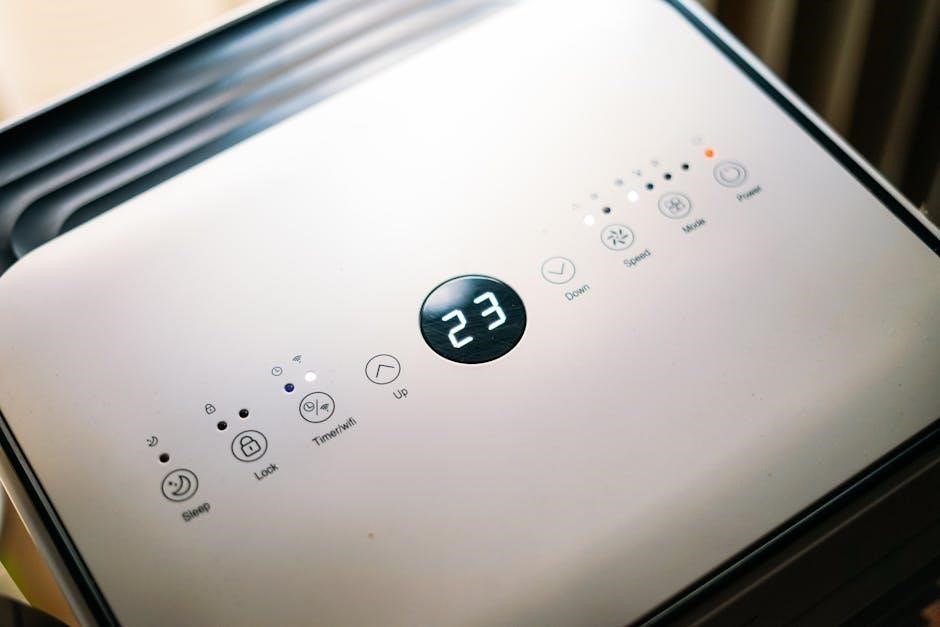
Hisense AC remotes offer a convenient timer function, allowing you to schedule your air conditioner to turn on or off automatically. This feature enhances comfort and promotes energy savings. To set the timer, typically locate the “Timer” button on your remote and press it.
You’ll then be prompted to set the desired on/off time using the number pad or arrow buttons. Some models allow for multiple timer settings throughout the day. Confirm your settings and the air conditioner will operate according to your programmed schedule. Refer to your specific model’s manual for detailed instructions, as button layouts and menu options may vary. Utilizing the timer function effectively can significantly reduce energy consumption and maintain a comfortable environment.
Sleep Mode Activation
Hisense air conditioners feature a sleep mode designed to create a more comfortable sleeping environment while conserving energy. Activating sleep mode gradually increases the set temperature over several hours, preventing the room from becoming too cold during the night.
To enable sleep mode, locate the dedicated “Sleep” button on your remote control and press it. The display will typically indicate that sleep mode is active. Some models allow you to customize the sleep mode settings, such as the rate of temperature increase or the duration of the mode. This feature is ideal for bedrooms, ensuring a peaceful and energy-efficient night’s sleep. Consult your remote’s manual for specific instructions.
Energy Saving Mode
Hisense air conditioners often include an energy-saving mode, optimized to reduce power consumption without significantly compromising cooling or heating performance. This mode typically adjusts fan speeds and compressor operation to minimize energy usage, resulting in lower electricity bills.
To activate energy-saving mode, look for a button labeled “Eco,” “Energy Saver,” or a similar designation on your remote control. Pressing this button will engage the mode, often indicated by a corresponding icon on the air conditioner’s display. This is a great option for everyday use, especially when the room isn’t occupied or when moderate temperature control is sufficient. Refer to your specific model’s manual for detailed instructions.
Remote Control Maintenance
Proper maintenance ensures longevity and optimal performance. Regularly replace batteries, clean the remote with a soft cloth, and store it in a dry location.
Battery Replacement
Maintaining optimal battery health is crucial for consistent remote operation. When the remote begins to exhibit reduced range or unresponsiveness, battery replacement is likely needed. Typically, Hisense AC remotes utilize AAA or AA batteries – check the battery compartment for the correct type.
To replace the batteries, gently slide open the battery compartment cover, usually located on the back of the remote. Remove the old batteries, noting the correct polarity (+ and -) indicated inside the compartment. Insert new batteries, ensuring proper alignment.
Close the battery compartment securely. Avoid mixing old and new batteries, or different battery types. Dispose of used batteries responsibly, following local regulations. Regularly checking and replacing batteries proactively prevents interruptions to your air conditioning control.
Cleaning the Remote
Regular cleaning ensures the longevity and hygiene of your Hisense AC remote. Dust, dirt, and oils from handling can accumulate, affecting button responsiveness and potentially causing malfunctions. To clean, begin by removing the batteries to prevent accidental operation.
Use a soft, dry cloth to wipe down the entire remote surface. For stubborn grime, lightly dampen the cloth with water or a mild, non-abrasive cleaning solution. Avoid harsh chemicals or solvents, as these can damage the plastic casing and button labels.
Ensure the remote is completely dry before reinserting the batteries. Pay particular attention to cleaning around the buttons and in any crevices. Consistent cleaning maintains optimal performance and a pleasant user experience.
Storage Recommendations
Proper storage extends the life of your Hisense AC remote and prevents damage when not in use. When storing for extended periods, remove the batteries to avoid potential corrosion from leakage. This is a crucial preventative measure.
Store the remote in a cool, dry place, away from direct sunlight and extreme temperatures. Avoid locations with high humidity, as moisture can cause internal damage. A drawer or storage box is ideal, protecting it from dust and accidental impacts.
Do not place heavy objects on top of the remote, as this could crack the casing or damage the buttons. Careful storage ensures your remote remains functional and reliable when you need it.
Hisense AC Remote & TV Input Control
Explore using your Hisense remote with both AC units and TVs, including methods for changing input sources efficiently and seamlessly.
Using the Remote with Hisense TVs
While primarily designed for air conditioners, some Hisense remotes offer limited TV control functionality. This capability allows basic operations like power on/off and volume adjustment on compatible Hisense televisions. However, full TV control, including navigating menus and changing channels, often requires a dedicated TV remote or a universal remote programmed for TV use.
To utilize the AC remote with your Hisense TV, ensure the remote is in TV mode (if applicable – check your remote’s manual). Point the remote directly at the TV’s infrared sensor. If the remote doesn’t respond, verify battery levels and try again. Remember, compatibility varies, and a dedicated TV remote provides the best experience.
Changing Input Sources
Although the Hisense AC remote isn’t designed for direct input source selection on TVs, several alternative methods exist for changing inputs on your Hisense television. These include utilizing the TV’s physical buttons, the dedicated Hisense TV remote, or a programmed universal remote. If your AC remote does have limited TV control, a dedicated “Input” or “Source” button might function, but this is uncommon.
For seamless input switching, explore the TV’s on-screen menu accessible via the TV remote. Many Hisense TVs also support control via smartphone apps, offering convenient input selection. Remember to consult your TV’s manual for specific instructions tailored to your model.

Downloading Manuals & Firmware
Access official Hisense resources online for your AC remote’s manual and potential firmware updates, ensuring optimal performance and access to the latest features.
Official Hisense Website Resources
Hisense’s official website is the primary source for comprehensive support regarding your air conditioner remote control. Navigate to the “Support” or “Downloads” section of the Hisense website for your region (e.g., Hisense Russia). Here, you’ll find a dedicated area for manuals, firmware updates, and frequently asked questions specifically tailored to Hisense appliances.
Utilize the search function, entering your remote control model number (like HYXE-VA01) or your air conditioner’s model number to pinpoint the correct documentation. The website often categorizes resources by product type, simplifying the search process. Look for downloadable PDF manuals offering detailed instructions and troubleshooting guides. Regularly check for firmware updates, as these can enhance remote functionality and compatibility.
Finding Specific Model Manuals
Locating the manual for your precise Hisense remote model is crucial for effective use. Begin by identifying the model number, typically found on the remote’s battery cover or within the battery compartment. Once you have this number (e.g., HYXE-VA01), utilize the Hisense official website’s search function.
If the website search proves unsuccessful, broaden your search using a general web search engine, including the terms “Hisense” and your remote’s model number, alongside “manual” or “user guide.” Be cautious of third-party websites; prioritize results directly linking to Hisense’s official domains to ensure accuracy and safety. Downloading the correct manual guarantees access to tailored instructions and troubleshooting steps.
Repairing a Hisense Remote
Basic troubleshooting and professional repair services are available to address issues with your Hisense AC remote, restoring functionality and avoiding replacement costs;
Basic Troubleshooting Steps
Before seeking professional help, attempt these simple fixes. First, ensure fresh batteries are correctly installed, checking for corrosion. Next, clear any obstructions between the remote and the AC unit’s sensor. Try resetting the remote by removing and reinserting the batteries.
If issues persist, inspect the remote’s buttons for sticking or damage. Gently clean the contact points with a soft, dry cloth. Confirm the AC unit is receiving power and responding to other controls.
Finally, test with a camera; if no infrared signal emits when pressing a button, the remote likely requires professional attention or replacement. These steps can often resolve minor malfunctions quickly.
Professional Repair Services
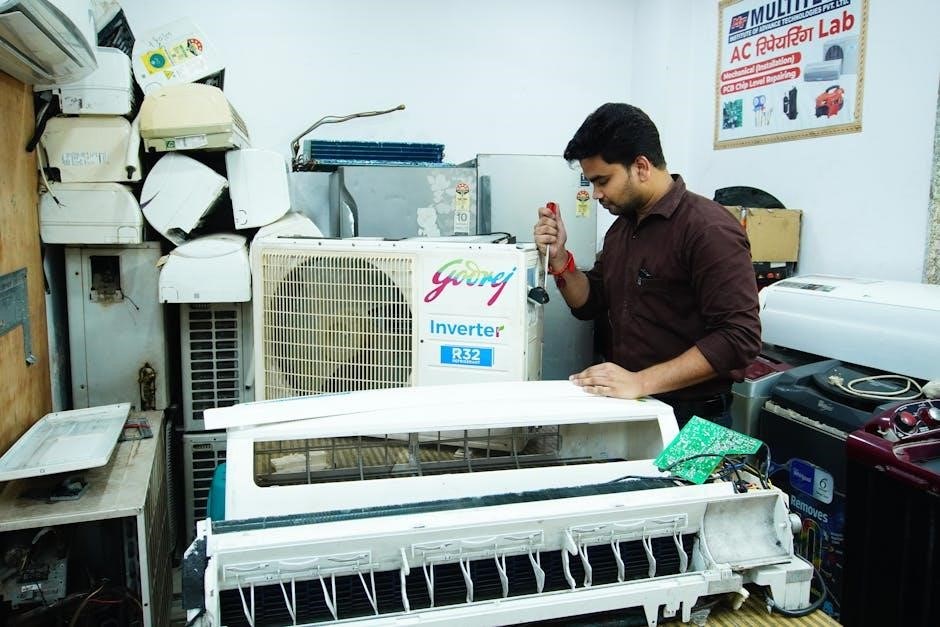
When basic troubleshooting fails, consider professional repair services for your Hisense AC remote. Local electronics repair shops often specialize in remote control diagnostics and component-level repairs. These technicians can identify and address issues like damaged circuit boards, infrared emitter failures, or button contact problems.
Alternatively, contact Hisense customer support for authorized service centers in your area. While repairs can be cost-effective, assess whether the expense outweighs the price of a new replacement remote, especially for older models.
Ensure the repair service offers a warranty on their work to protect against future malfunctions. A skilled technician can restore functionality and extend the life of your remote.